New Stucco Installation in Little Rock, AR
Traditional cement stucco is hard, fire resistant and can last for generations when it is put on right. We install new three-coat stucco in Little Rock, AR on new homes, additions and houses being re-sided, with the drainage details that let a wall shed central Arkansas rain instead of holding it.
Call for a free estimate: (501) 235-6768Ask for a free estimate
Give us a name and a phone number. Anything else you add helps us come out ready.
- Flat upfront pricing
- Insured
- Free estimates
- We sweep up before we leave
What goes into a new stucco wall
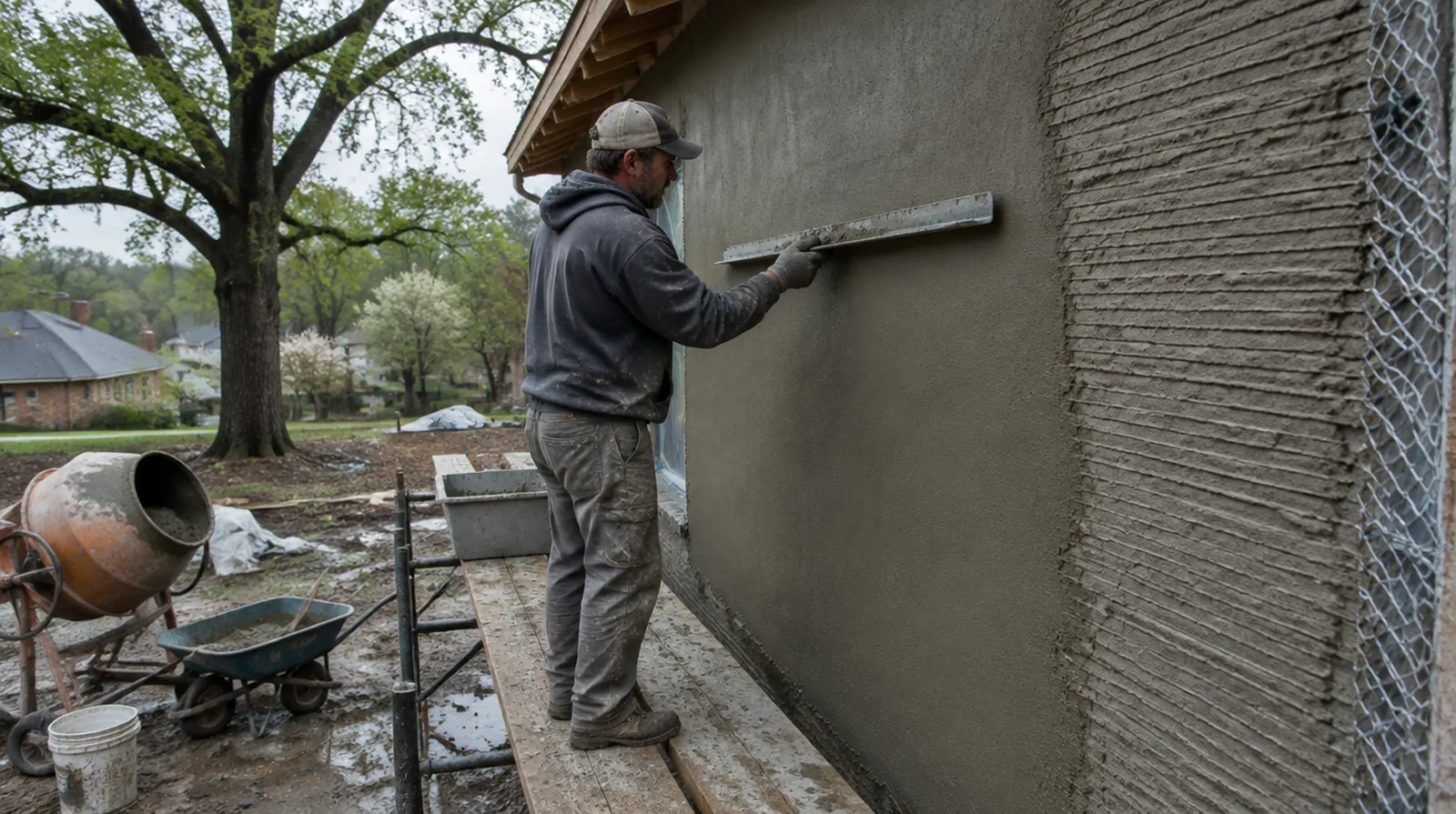
Hard-coat stucco is portland cement, sand, lime and water, applied by hand in layers. On a wood-framed house, a complete wall is built from the sheathing out:
- Two layers of water-resistive barrier. Building paper or housewrap, lapped like shingles so any water that gets behind the stucco runs down and out.
- Metal lath. Galvanized expanded metal or wire lath, fastened into the framing, gives the cement something to lock onto.
- Scratch coat. The first layer is pressed through the lath and scored with horizontal grooves.
- Brown coat. The second layer is floated flat and straight. This is where the wall gets its shape.
- Finish coat. The final layer carries the color and texture.
Together the three coats run close to seven-eighths of an inch thick. That mass is what gives cement stucco its durability and its quiet, solid feel.
Building for Little Rock rain
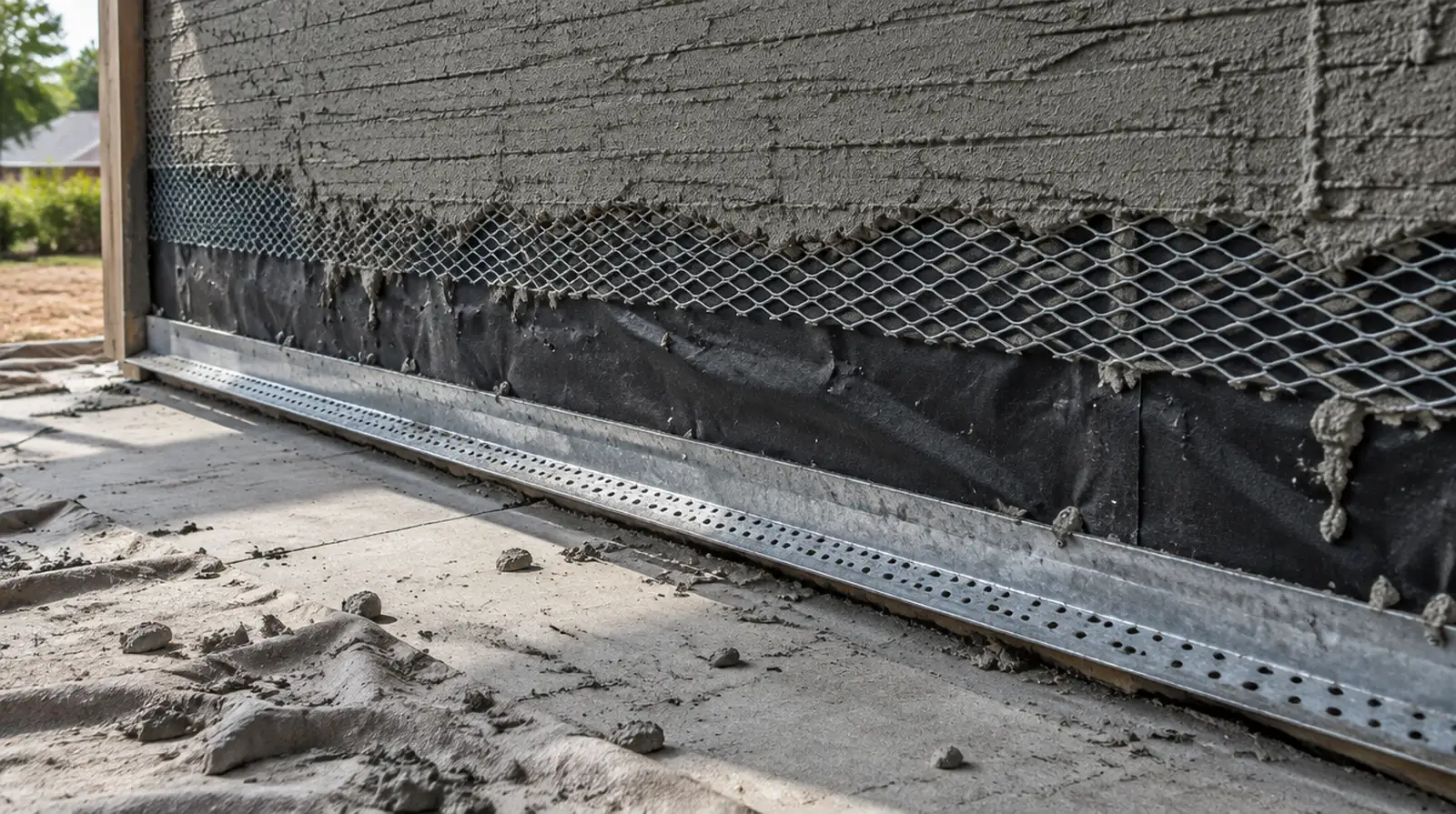
Central Arkansas averages around 50 inches of rain a year, with heavy spring storms and long, humid summers. Water will find its way behind any cladding, so the goal is to give it a way back out. The double barrier layer is part of that. So is the weep screed, a metal strip at the bottom of the wall that lets water drain and keeps the stucco from touching soil. We set it at least four inches above the ground or two inches above a patio or walk, as the building code calls for.
Around windows and doors, we install head flashing and make sure the barrier laps over the window flanges correctly. At roof lines, kick-out flashing steers runoff away from the wall. These small pieces of metal and paper are where most stucco leaks start, so they get more of our attention than the finish does.
Curing: the step people rush
Cement stucco gains its strength by curing slowly while it stays damp. In a Little Rock July, the sun on a west wall can dry a fresh coat in hours, and stucco that dries too fast shrinks and cracks. We mist the scratch and brown coats for the first couple of days and give each layer time before the next one goes on. In hot weather we start early, work the shaded walls in the afternoon and hang tarps when needed. In winter, we do not apply stucco when temperatures are near freezing, since frozen cement never fully cures.
We also place control joints to give the wall planned places to move. On larger walls they break the surface into smaller panels and line up with window corners, where cracks like to start.
Where we install new stucco
Additions and garages on older stucco homes in Hillcrest and the Heights, where the new wall has to match a texture that may be ninety years old. Re-siding projects where worn wood or vinyl siding comes off and stucco goes on in its place. New custom homes in Chenal Valley and west Little Rock. Masonry walls, such as block foundations, garden walls and plain brick, where stucco can be bonded directly to the masonry in two coats.
Not sure whether you want cement stucco or synthetic? Hard coat holds up better to impact and is a natural fit for older homes. If you want insulation built into the wall or a lot of shaped trim, see our EIFS installation page, and we will help you compare.
Finishes, permits and cost
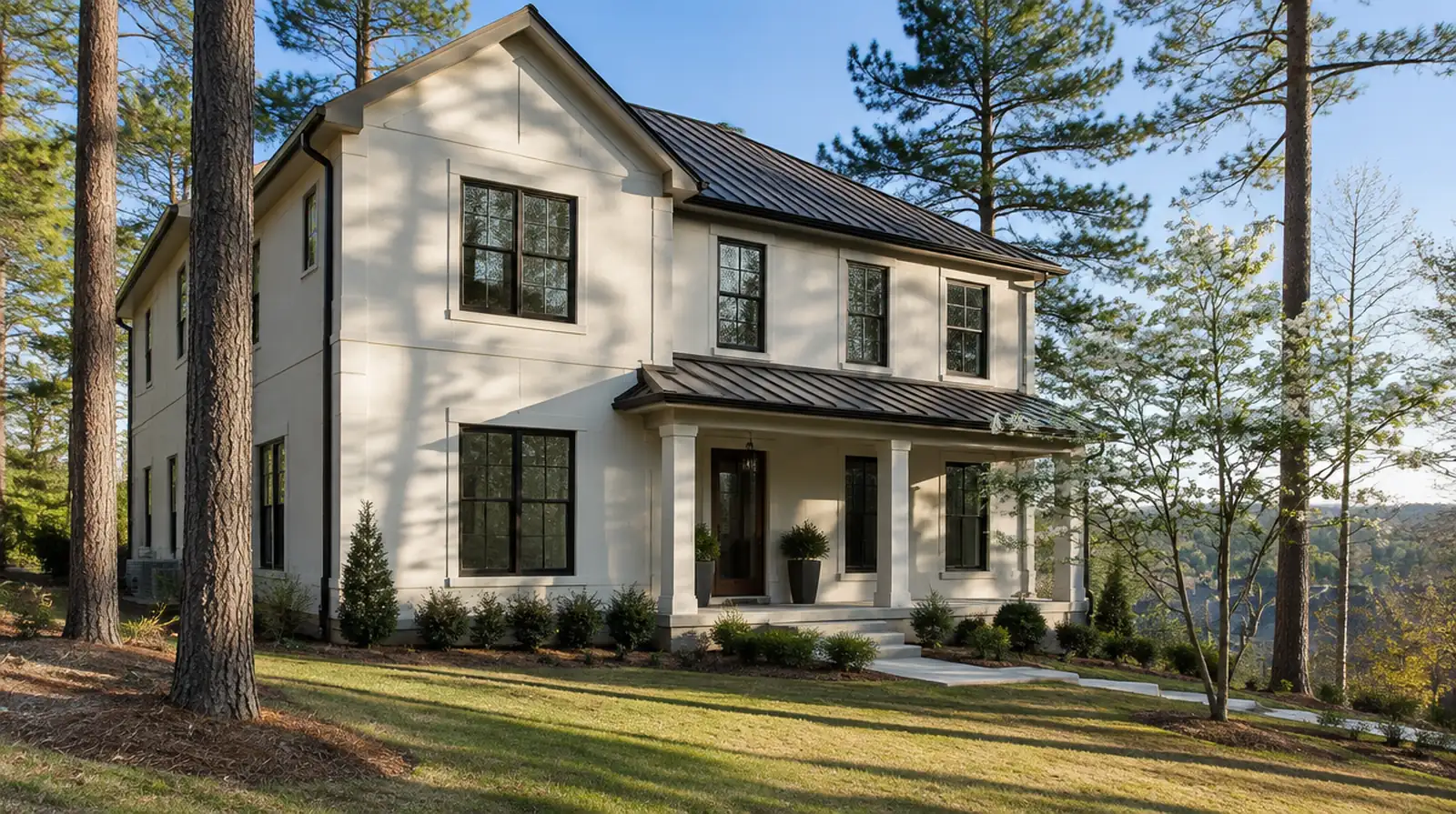
The finish coat can be a fine sand float, a smooth trowel, a lace or skip-trowel texture, or a dash finish that matches many older Little Rock homes. Color can be integral, mixed into the finish, or painted later with a breathable masonry paint.
Most new exterior cladding needs a building permit from the City of Little Rock, with inspections of the lath and barrier before the cement goes on. Homes in the MacArthur Park Historic District also need a certificate of appropriateness for exterior changes. We take care of the paperwork and the inspection schedule.
Price depends on wall area, height and access, how many windows and corners break up the wall, whether old siding has to come off, and the finish you choose. You get a flat written price after we visit. Once your new stucco is up, small dings and hairlines can be handled with stucco crack repair years down the road.
Questions about new stucco
How long does a three-coat stucco job take?
Most homes take two to four weeks from lath to finish. Each coat needs time to cure, and we keep the base coats damp for the first couple of days so they gain strength instead of cracking.
Can stucco go straight onto brick or block?
Often, yes. Clean, sound masonry can take stucco directly with a bonding agent and two coats, without lath. Painted or sealed brick usually needs lath or extra prep so the stucco can grip.
Will new stucco crack?
Cement stucco can develop fine hairline cracks as it cures, which is normal and cosmetic. Control joints, proper lath and slow curing keep cracking to a minimum. Wider cracks are a sign of a problem and are covered by our workmanship warranty.
Do I need a permit?
New exterior wall cladding generally requires a building permit from the City of Little Rock, and homes in the MacArthur Park Historic District also need approval from the Historic District Commission. We pull the permit and schedule inspections as part of the job.
Planning new stucco?
Call or send plans and photos through the form. We will walk the project, explain how we would build the wall and give you a flat-price estimate.
Call (501) 235-6768