Stucco Painting in Little Rock, AR
Faded, chalky or mildew-streaked stucco does not always need a new finish coat. Often it needs the right paint. We paint stucco on homes and commercial buildings in Little Rock, AR with coatings made for masonry, applied over clean, repaired walls so the color lasts through our long, wet summers.
Call for a free estimate: (501) 235-6768Ask for a free estimate
Give us a name and a phone number. Anything else you add helps us come out ready.
- Flat upfront pricing
- Insured
- Free estimates
- We sweep up before we leave
Why stucco needs its own kind of paint
Stucco is porous. It takes on moisture during rain and lets it out again as the wall dries. The paint on top has to let that vapor pass, or water gets trapped behind the film. That is when you see bubbles, peeling sheets of paint and dark damp patches that never quite dry out.
We use 100% acrylic masonry paints, mineral silicate paints for older cement walls, and elastomeric coatings where a wall needs help bridging fine cracks. Choosing between them depends on the age of the wall, how it was built and how much moisture it sees.
What Little Rock weather does to painted stucco
Central Arkansas gets close to 50 inches of rain a year, and summer humidity stays high for months. That keeps walls damp, especially on the north side and under big oaks and pines. Mildew and green algae grow fast on those shaded walls, and spring pine pollen leaves a yellow film that holds even more moisture.
The south and west walls have the opposite problem. Afternoon sun bleaches pigments and breaks down older paint until it turns chalky and rubs off on your hand. Picking the right coating for each side of the house is part of the job.
Homes we paint around the city
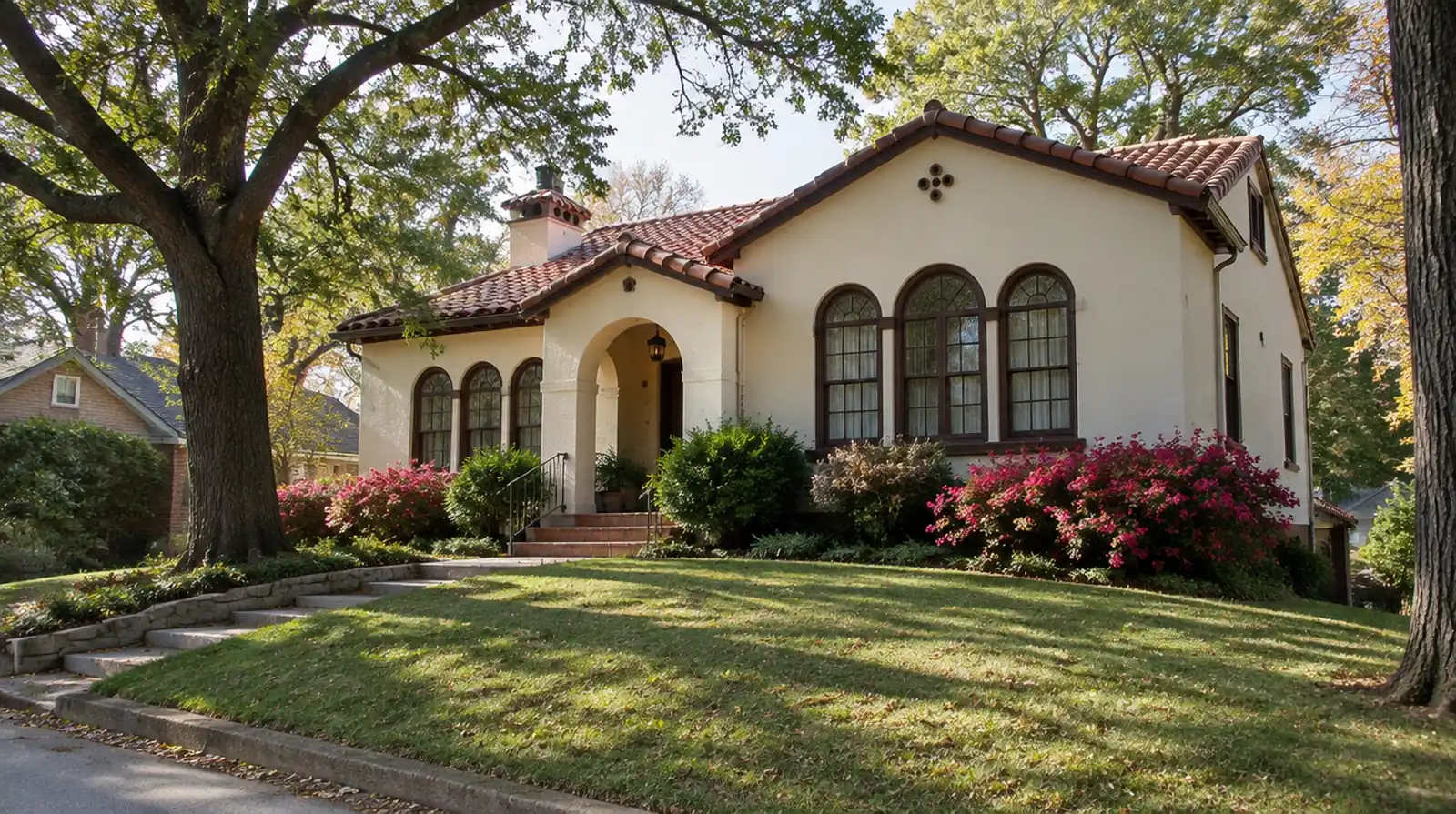
Little Rock has more stucco than many people expect. Hillcrest and the Heights have 1920s and 1930s Spanish and Mediterranean style houses with original cement stucco, often painted several times over the decades. Those older walls usually do best with a breathable mineral or acrylic paint, since an elastomeric layer can trap moisture in old lime-rich stucco.
Out west, Chenal Valley and the neighborhoods off Rahling Road and Kanis Road have many 1990s and 2000s homes clad in stucco or synthetic stucco. These walls often have hairline cracks around windows and at the corners, so a flexible coating makes sense once the sealant joints are renewed. We also paint stucco on apartment buildings, offices and storefronts across the city.
How the job works
1. Inspect the wall
We look for cracks, loose patches, failed sealant and damp spots, and we check the wall with a moisture meter in suspect areas. Paint will not fix a wet wall. If water is getting in, we will tell you and handle that first through water-damaged stucco repair.
2. Clean
We wash the walls with a low-pressure rinse and a mildew cleaner. High pressure can drive water into stucco and damage the texture, so we keep it gentle and let the wall dry for a day or more before painting.
3. Repair
Cracks are opened, cleaned and filled with a flexible patch. Chipped corners and holes get rebuilt, and we feather repairs into the existing texture so they do not show through the new color. Worn caulk at windows, doors and trim is cut out and replaced.
4. Prime
Chalky walls, fresh patches and bare spots get a masonry primer so the topcoat bonds evenly.
5. Paint
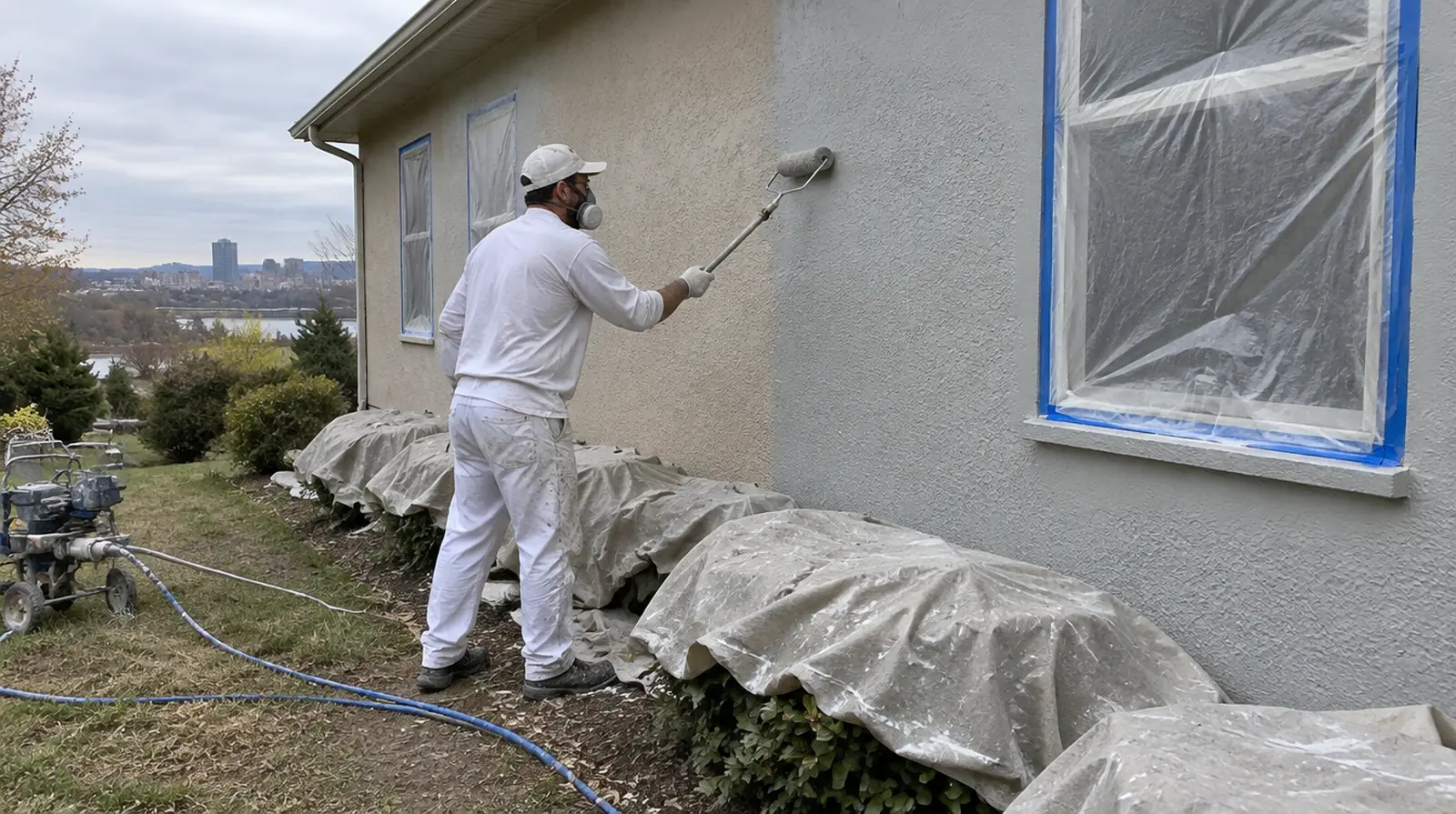
We spray the paint to reach into the texture, then back-roll it to work it into every pore. Two coats are standard. Windows, doors, lights, roofs and plants are covered before we start.
Color, timing and cost
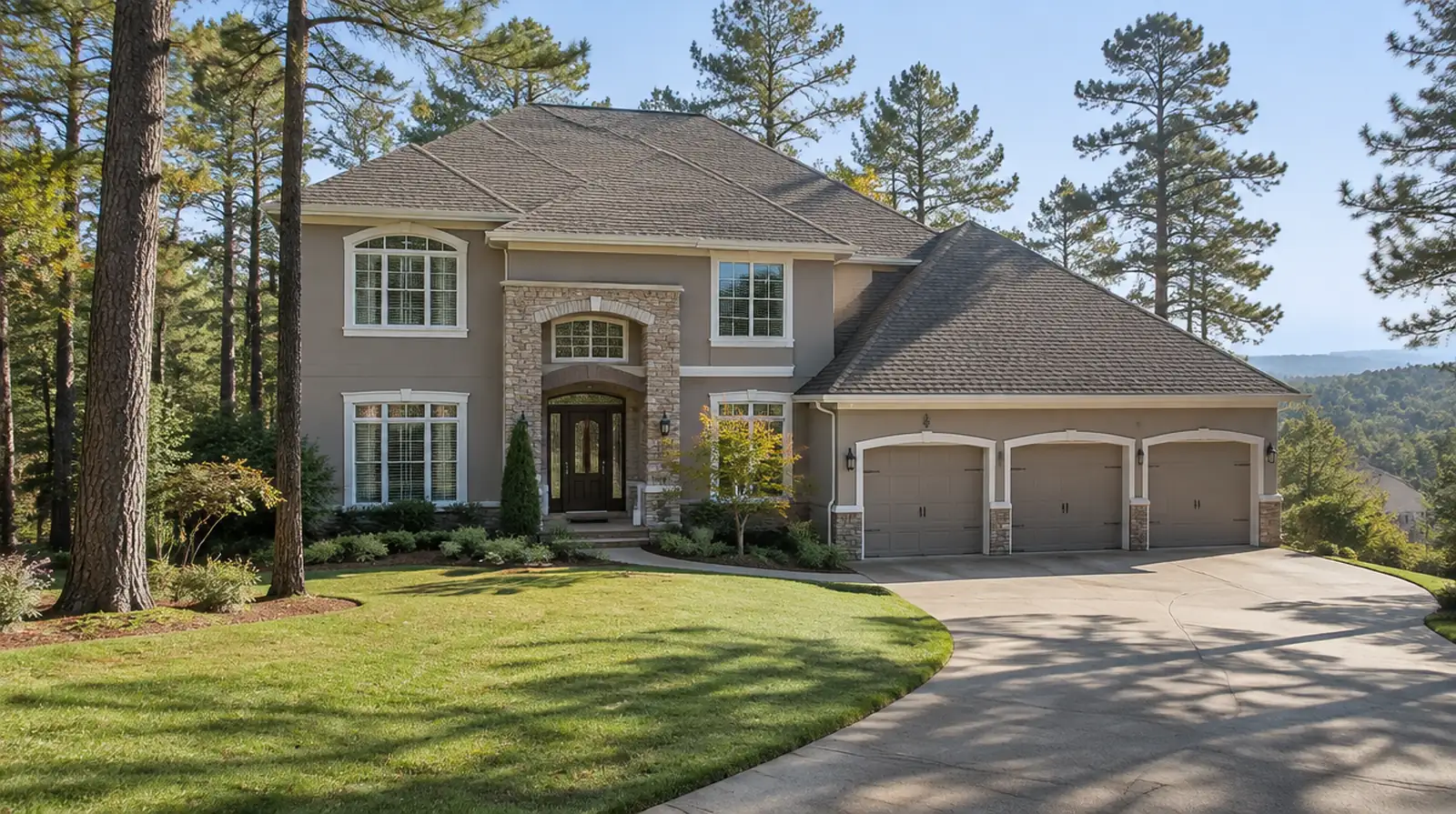
Lighter, earthy colors like cream, sand, taupe and soft gray are the most common here because they hold up well in the sun and hide pollen. Darker colors absorb more heat, which can stress the wall and fade faster.
Paint needs dry weather and moderate temperatures to cure. Spring and fall are ideal in Little Rock, while summer jobs start early in the morning and follow the shade around the building. We avoid painting when rain is expected within a day or overnight lows near freezing.
Cost depends on wall area, the number of stories, how much repair and caulking is needed, and the coating. Elastomeric costs more than standard masonry paint, but it is thicker and can last longer on the right wall. You get a flat, written price after we inspect.
If the finish itself is worn out, with heavy patching or texture that no longer matches, stucco resurfacing may be a better step than paint. We will tell you which one the wall really needs.
Questions about painting stucco
Can any paint go on stucco?
No. Stucco needs a masonry paint that lets moisture escape, such as a breathable acrylic, a mineral silicate or an elastomeric coating where the wall needs crack bridging. Regular house paint can trap water and peel.
How often should stucco be repainted?
In Little Rock's humid climate, most painted stucco walls need a fresh coat every 8 to 12 years. Sun-facing and shaded north walls may need attention sooner.
Do you fix cracks before painting?
Yes. Every crack is cleaned out and filled with a flexible patch first. Paint alone does not hold a crack closed.
Is elastomeric paint always the best choice?
Not always. It bridges hairline cracks well, but it is less breathable, so we only use it on walls that are dry and well flashed. On older walls, we often choose a more breathable paint.
Get a price on painting your stucco
Call or send a few photos through the form. We will come look at the walls, talk about colors and coatings, and give you a flat-price estimate.
Call (501) 235-6768