Stone Veneer Installation in Little Rock, AR
Stone wainscots, columns and accent walls add weight and warmth to a house, but only if the wall behind them can still drain. We install stone veneer in Little Rock, AR over stucco, block and framed walls, with the lath, weep screed and flashing that keep central Arkansas rain from getting trapped behind the stone.
Call for a free estimate: (501) 235-6768Ask for a free estimate
Give us a name and a phone number. Anything else you add helps us come out ready.
- Flat upfront pricing
- Insured
- Free estimates
- We sweep up before we leave
Where stone veneer fits on a Little Rock home
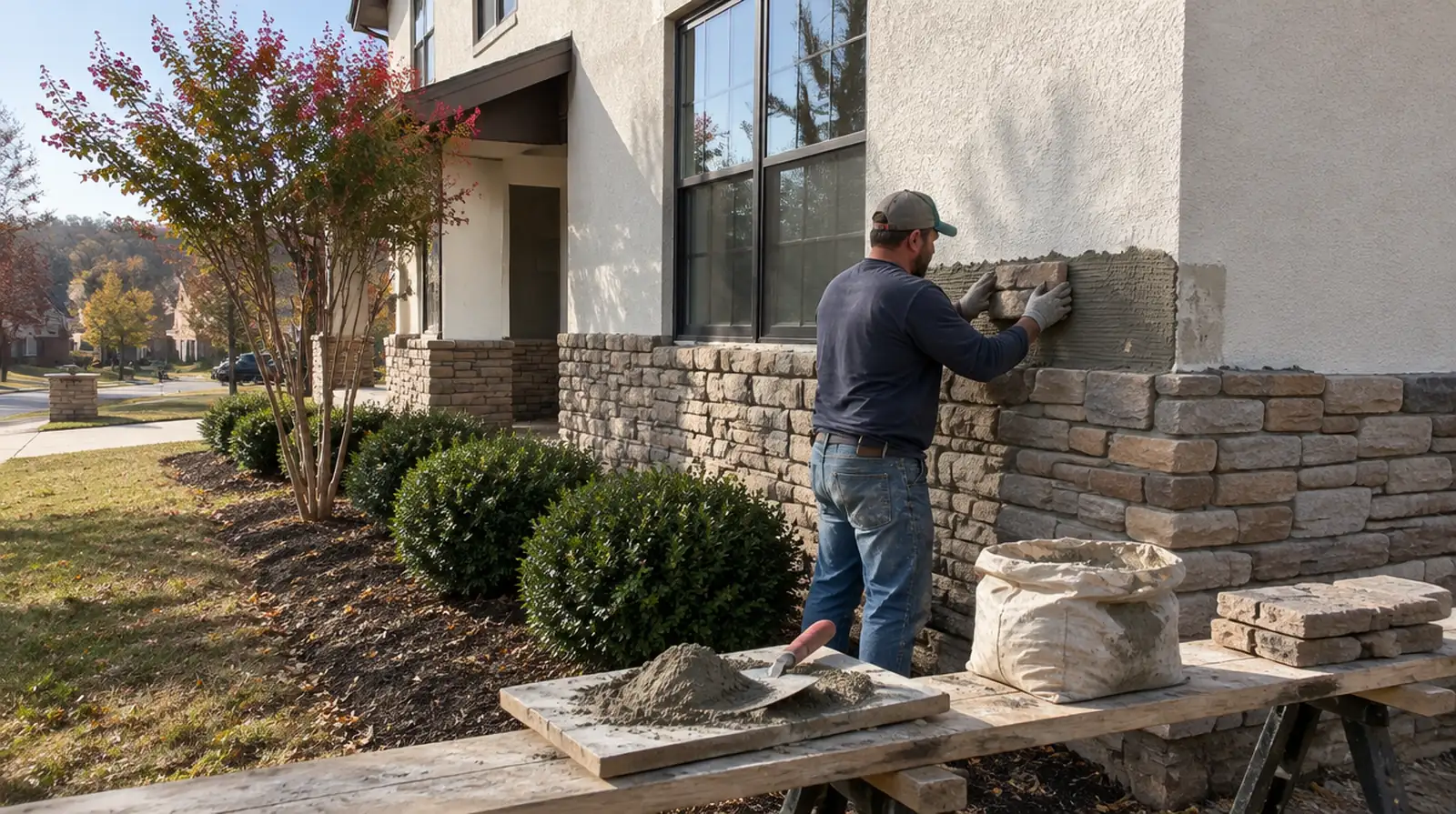
Drive through Chenal Valley, west Little Rock or the newer parts of the Heights and you will see stone used the same few ways: a wainscot across the lower third of the front wall, wrapped porch columns and piers, a chimney chase or an accent wall around the entry. Older homes in Hillcrest and Pulaski Heights more often have real Arkansas fieldstone or sandstone in foundations, garden walls and chimneys, and owners sometimes want new work that sits comfortably beside it.
We work with two main types of stone. Manufactured stone veneer is a lightweight cast product that comes in many profiles, from stacked ledgestone to rounded river rock. Thin natural stone is real stone sawn to about an inch thick, so it can be set like veneer without a footing. Both go on with mortar over a prepared wall, and both depend on the same drainage details to last.
The wall behind the stone matters most
Stone and mortar soak up water. In a place that gets around 50 inches of rain a year, with long humid summers, some of that water will reach the back of the veneer. The wall has to be built so it can drain and dry. On a framed wall, that means:
- Water-resistive barrier. Two layers, lapped so water runs down and out, or a barrier with a built-in drainage gap.
- Corrosion-resistant lath. Galvanized metal lath fastened into the studs, not just the sheathing.
- Scratch coat. A layer of mortar pressed into the lath and scored, which gives the stone a solid bed.
- Weep screed or a drainage edge. At the bottom of the wall, set above soil and paving, so water has a way out.
- Flashing. Over windows and doors, at roof-to-wall joints and wherever stone stops under stucco or siding.
We follow the manufacturer instructions and the industry standard for adhered stone veneer, ASTM C1780. Skipping these steps is the most common reason we get called to tear off rotting veneer, usually on houses that are only ten or fifteen years old.
Stone and stucco together
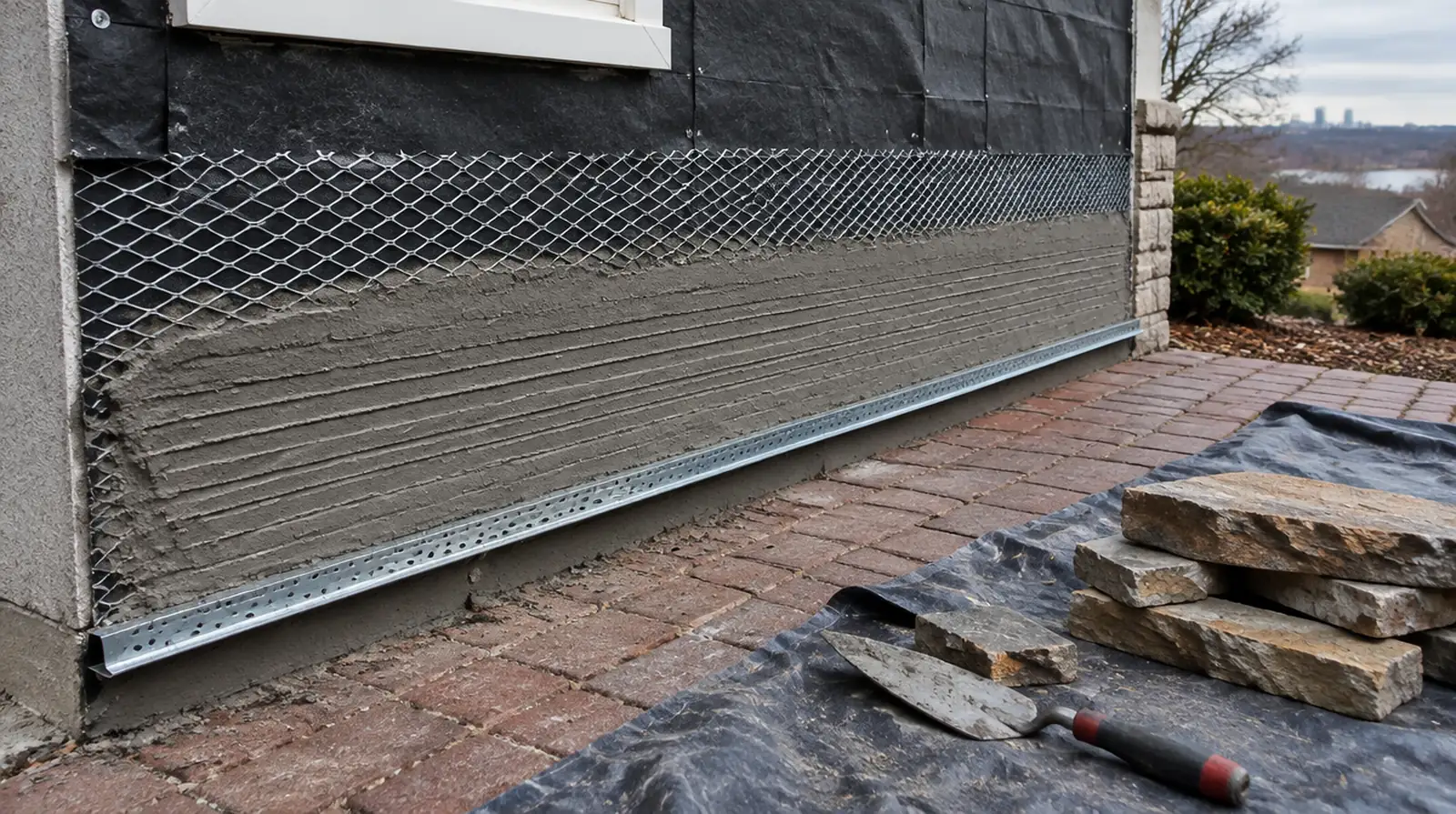
Many homes we see in Little Rock combine stucco on the upper walls with a stone base. The joint between the two is a weak spot if it is not detailed. We use a proper termination where stucco meets the top of the stone, either a small ledge with flashing that kicks water out or a cap stone with a slight slope. Stone should not be buried in mulch or set tight to a patio, and we keep the bottom course a few inches above finished grade so the wall can breathe.
Adding stone to an existing stucco house? If the stucco is solid cement and well attached, it can often be cleaned and prepared to take a new scratch coat. If it is cracked, painted with a film-forming coating or holding moisture, we deal with that first. Our water-damaged stucco repair page explains how we track down leaks before adding anything new. We do not set stone directly over EIFS or foam-backed synthetic stucco; that system has to be cut back and replaced with a proper base where the stone will go.
How the job goes
Visit and plan. We look at the wall, check for moisture and talk about the stone, color and mortar joint style you want. Bring photos of homes you like.
Prep. We install or repair the barrier, lath, screed and flashing, then apply and cure the scratch coat.
Setting. Each stone is back-buttered for full contact and pressed into a fresh mortar bed. Corners are set first, then the field, with cuts placed where they will not be noticed. Joints are tooled or left tight, depending on the look.
Cleanup. Mortar smears are brushed off before they harden, the site is cleaned and we walk the finished work with you.
Most wainscots and column wraps take a few days. Larger accent walls and chimneys can take a week or more. We avoid setting stone when nights drop near freezing, and on hot summer afternoons we mist the scratch coat and work shaded walls so mortar does not dry too fast.
Permits and cost
Changing exterior cladding usually needs a building permit from the City of Little Rock, and properties in local historic districts may need design review. We handle that paperwork. Cost depends on the square footage, the stone you pick, how many corners and openings the wall has, how tall it is and whether the existing wall needs repair first. You get a written, flat price after the site visit. Planning a whole new exterior instead? See new stucco installation to compare.
Questions about stone veneer
Can stone veneer go over my existing stucco?
Sometimes. Sound, well-attached cement stucco can be prepared to take veneer. Painted or cracked stucco, and all synthetic stucco or EIFS, usually needs lath and a new scratch coat, or removal, before stone can be set safely.
How heavy is manufactured stone?
Most manufactured stone veneer weighs roughly 10 to 15 pounds per square foot once it is set, which is why it needs a solid mortar bed over lath instead of glue on siding. Full natural stone is heavier and may need a ledge or footing.
Does stone veneer need a permit in Little Rock?
Exterior cladding changes generally need a building permit from the City of Little Rock, and homes in a local historic district also need design approval. We confirm what your project needs and pull the permit.
Will the stone crack or fall off?
When it is installed over a proper drainage layer and lath with full mortar coverage, veneer is very durable. Most failures we repair come from missing weep screed, poor flashing or stone set straight onto sheathing.
Thinking about adding stone?
Call or send a few photos through the form. We will look at the wall, show you stone options and give you a flat-price estimate.
Call (501) 235-6768